Posted on — Leave a comment

Fatima Zahra: They Told Her No at Home First

SmashNRun athlete story card, Fatima Zahra, Commonwealth Games bronze

Fatima Zahra is from Sargodha. She started boxing in 2018, after watching a film about Mary Kom.

Her family did not want her to do it.

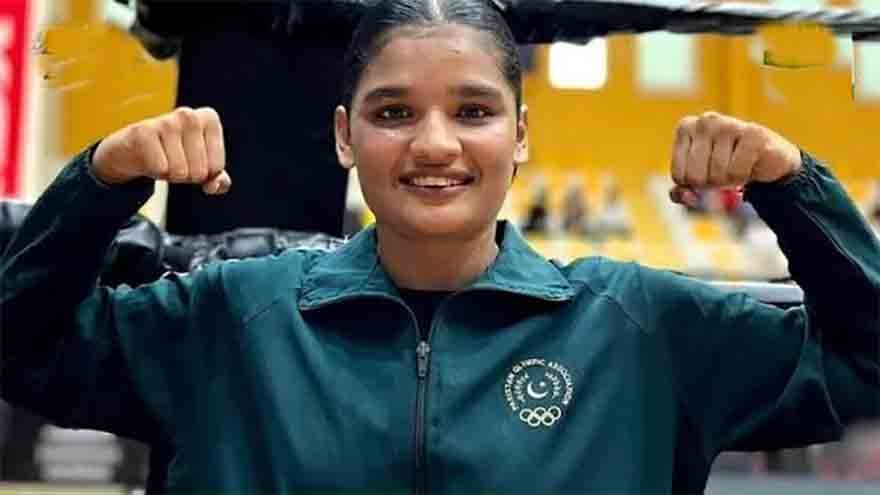
Fatima Zahra in Pakistan team kit
Photo: Dunya News

The argument at home, and the one who took her side

The resistance came from inside the house first, which is the part of these stories that usually gets left out. Her father had been a sportsman himself and backed her, and the rest of the family came round later, once the results started.

Pakistan’s women’s boxing team only began competing internationally in 2016. She took the sport up two years after that, into a setup with almost nothing behind it.

Eight national titles, then the ones that counted abroad

Between 2021 and 2025 she won eight consecutive national titles and went unbeaten in domestic championship finals. She came up through Punjab Boxing, works with the coach Raheel, and represents the Pakistan Army, which is where the structured training and the facilities came from.

In 2025 she took bronze at the Islamic Solidarity Games in Riyadh, the first Pakistani woman to win a boxing medal at a major international multi sport event.

Glasgow, 2026

At the Commonwealth Games she beat New Zealand’s Jordan Wilson 5-0 on a unanimous decision in the quarter final at 60kg. That result guaranteed the medal.

She lost the semi final to Canada and took bronze. First Pakistani woman to win a Commonwealth Games boxing medal.

She is 22. They call her the Honey Boxer.

Most of what she talks about publicly is not the medals. It is other girls in Sargodha getting into a boxing club.

Made in Pakistan

What we make

SmashNRun builds sportswear and sports gear in Pakistan, for people who actually train here. Premium make, priced so you can wear it hard.

See the full rangeNew drops and athlete stories go out first on Instagram.
Posted on — Leave a comment

Noor Zaman: A World Title, and a Name to Carry

SmashNRun athlete story card, Noor Zaman, U23 World Squash Champion

Noor Zaman is the grandson of Qamar Zaman. In Pakistani squash that is a heavy name to carry, and it has been a long time since the country had much to put beside it.

In April 2025, in Karachi, he won the Under 23 World Championship.

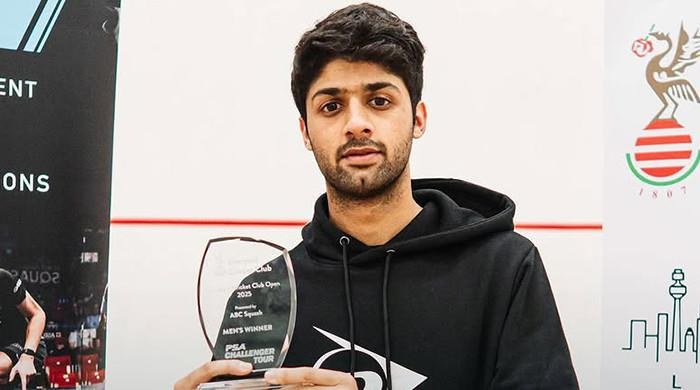
Noor Zaman with a trophy
Photo: Geo. The trophy shown is from a PSA Challenger Tour event.

Born into it, which is not the same as given it

Born in Peshawar on 1 April 2004. Professional since 2019. Asian Junior champion in the boys under 19 category in 2022, and part of the Pakistan team that took silver at the Asian Games the same year.

Being Qamar Zaman’s grandson gets you attention early and a standard you did not set. Most players carrying a name like that never reach the level the name implies.

Five games at the DHA Creek Club

The final was at the DHA Creek Club in Karachi on 10 April 2025, against Karim El Turky of Egypt.

He won it 3-2. Egypt has dominated world squash at every age group for two decades, and beating an Egyptian in a five game world final, at home, is the version of that result that carries the most weight.

Where he is now

He has five PSA titles and has reached ten tour finals. His world ranking reached a career high of 37 in October 2025 and sat at 38 by December.

That is the honest picture. A world junior title is a promise rather than a conclusion, and the top of the senior game is a long way above 37. He is 21.

Made in Pakistan

What we make

SmashNRun builds sportswear and sports gear in Pakistan, for people who actually train here. Premium make, priced so you can wear it hard.
See the full rangeNew drops and athlete stories go out first on Instagram.
Posted on — Leave a comment

Shahzaib Rind: From YouTube Tutorials to a World Title

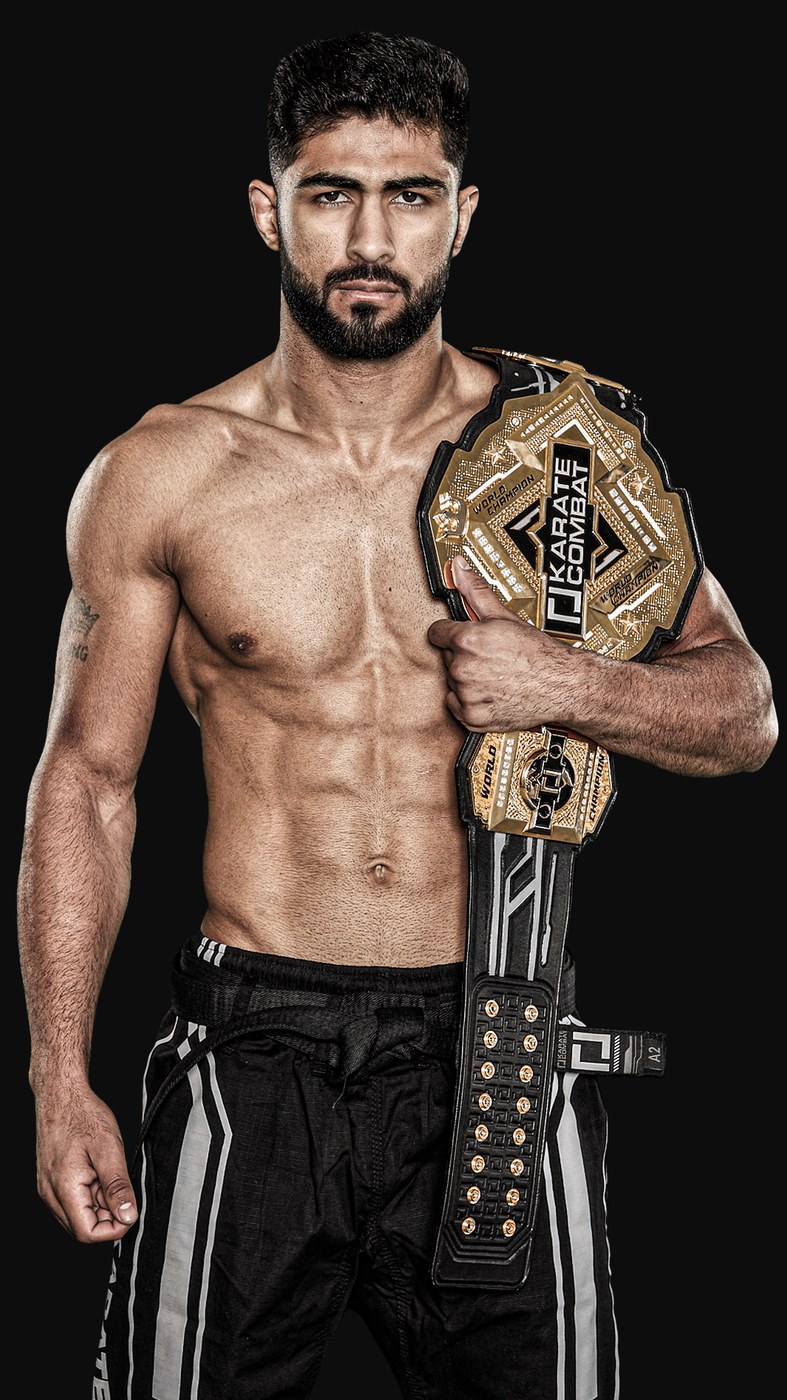
SmashNRun athlete story card, Shahzaib Rind, Karate Combat world title

Shahzaib Rind started karate at eight, in a wushu academy in Quetta. For a long stretch after that he learned from YouTube videos, because there was nobody around him doing what he wanted to do.

On 18 September 2024, in Singapore, he became the Karate Combat world lightweight champion.

Shahzaib Rind with the Karate Combat championship belt
Photo: Karate Combat

Quetta, and a long way from anywhere

He began at the Young Tiger Wushu Academy in Quetta. His first provincial title came in 2011. His first national title did not arrive until 2019, at the National Games in Khyber Pakhtunkhwa, which is eight years of competing in a discipline with almost no professional structure behind it in Pakistan.

The gap was closed by leaving. He eventually joined the Goat Shed gym in Miami under the coach Asim Zaidi.

The title, taken on short notice

The championship bout in Singapore was against the Brazilian Bruno Roberto de Assis, and Rind took it on short notice. He won, and became the first Pakistani to hold a Karate Combat world title.

His professional Karate Combat record at that point stood at seven wins and no losses. Across wushu and kickboxing his combined record is reported at 75 and 4.

What happened when he got home

Quetta gave him a hero’s welcome. The President announced a reward of one hundred million rupees.

Both of those are worth noting for the same reason. Neither existed while he was learning the sport from a phone screen. The money and the reception arrive after the hard part is over, which is how it usually goes for Pakistani athletes in sports the country has not organised itself around yet.

He is known as the Karate Kid. He was twenty six when he won the title.

Made in Pakistan

What we make

SmashNRun builds sportswear and sports gear in Pakistan, for people who actually train here. Premium make, priced so you can wear it hard.
See the full rangeNew drops and athlete stories go out first on Instagram.
Posted on — Leave a comment

Manisha Ali: Less Than a Year In, and a World Cup Gold

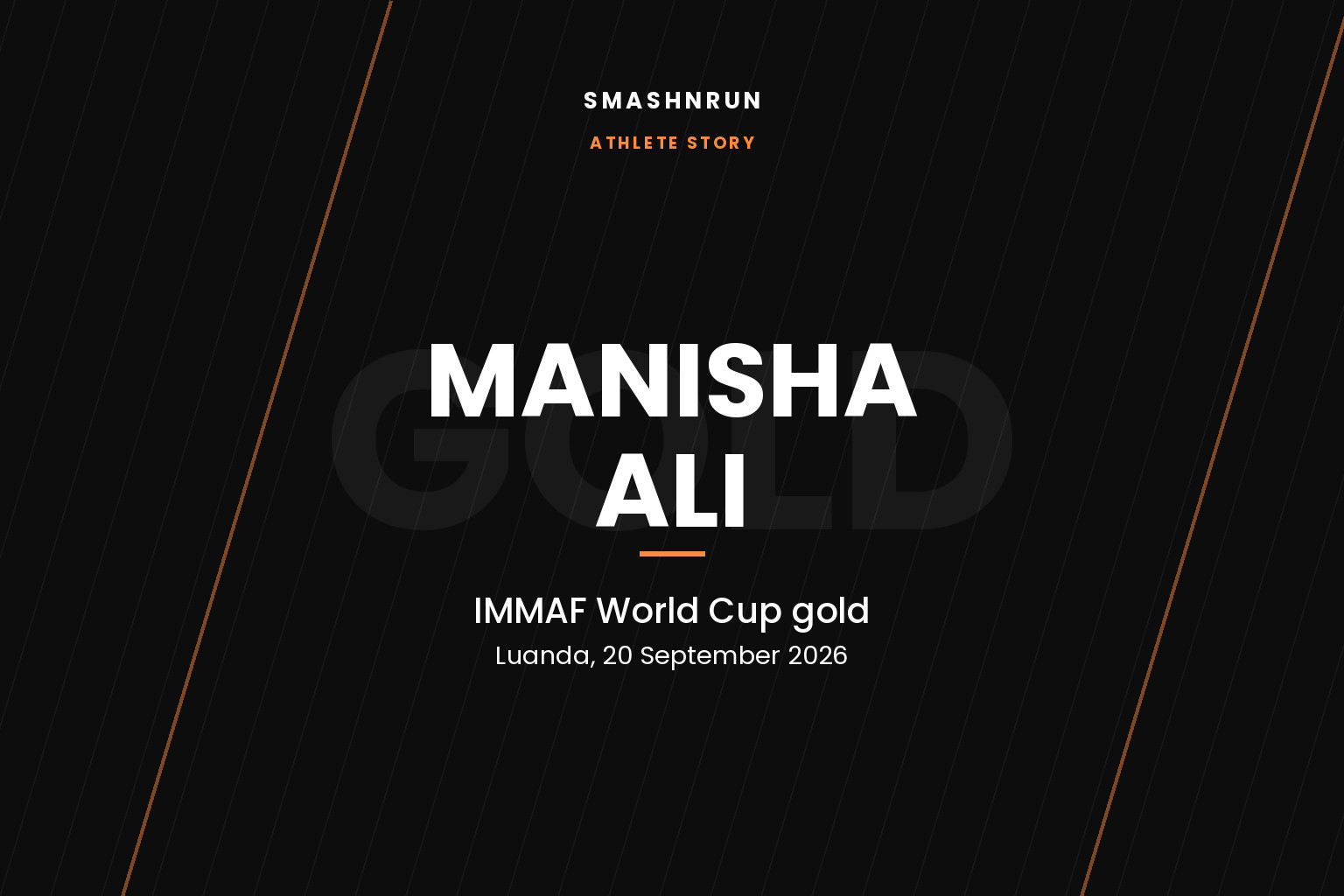
SmashNRun athlete story card, Manisha Ali, IMMAF World Cup gold

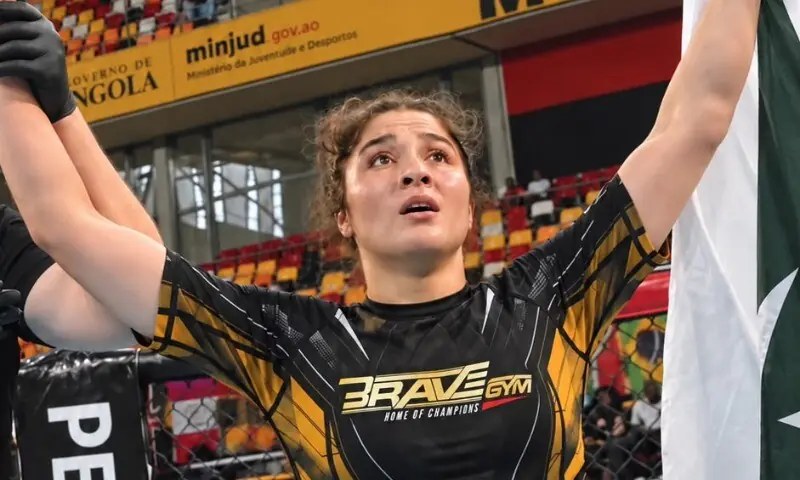
Manisha Ali walked out for the final of the IMMAF World Cup in Luanda on 20 September. Her opponent was Angolan, fighting at home. Ali had been training for under a year.

She won by submission.

Manisha Ali after her IMMAF World Cup bout in Luanda
Photo: PAKMMA Federation, via Dawn

From Gilgit-Baltistan to a gym in Lahore

Ali is from Gilgit-Baltistan, the mountain region in Pakistan’s far north. It is an unlikely place for a mixed martial arts career to start, and it has now produced more than one. Anita Karim, the first Pakistani woman to win repeatedly at international level, comes from Hunza in the same region.

Ali trains at Brave Gym in Lahore under the coach Omar Ahmed. Every report from the tournament put the same number on it: less than twelve months in the gym before she flew to Angola.

That is the part worth holding onto. Most fighters who reach a world cup final have years of amateur bouts behind them. She had months.

Fifteen seconds left

The final was against Leonela Isabel Blaiye of Angola, in front of an Angolan crowd.

Ali took her in the second round with a standing guillotine choke. Fifteen seconds remained on the clock.

A standing guillotine is not a technique you land by accident, and it is not one you land on someone who is comfortable. It needs the head in the right place, the grip locked before the defence arrives, and the composure to finish while your own legs are still under you. She found it with the round running out.

Her sister Maleeha was watching from the crowd.

What she said afterwards

“I believe completely in my training and in the mentorship of Omar Ahmed,” Ali said. “In less than a year, I have developed enormously as a fighter, but this is only one step.”

Her gym put it a different way on Instagram, calling her a role model for young girls across Pakistan, and saying she shows what the right environment, belief and mentorship can build.

Both statements are about the same thing. Neither of them is about the medal.

What she is aiming at

Two things are already on the calendar. The Pakistan Open comes first. Then the IMMAF World Championships in Georgia, starting on 1 November.

Beyond that she has been plain about the ambition: an IMMAF world title, and to become the first Pakistani woman to fight in the UFC.

Nobody has done the second one. Stated out loud, by a fighter with under a year of training and a world cup gold, it sits somewhere between a plan and a dare. The Georgia result will say a good deal about which.

On 20 September, with fifteen seconds left in the second round, Manisha Ali found the grip.

Made in Pakistan

What we make

SmashNRun builds sportswear and sports gear in Pakistan, for people who actually train here. Premium make, priced so you can wear it hard.
See the full rangeNew drops and athlete stories go out first on Instagram.
Posted on — Leave a comment

Mahoor Shahzad: Nine Titles, and the First Pakistani Shuttler at the Olympics

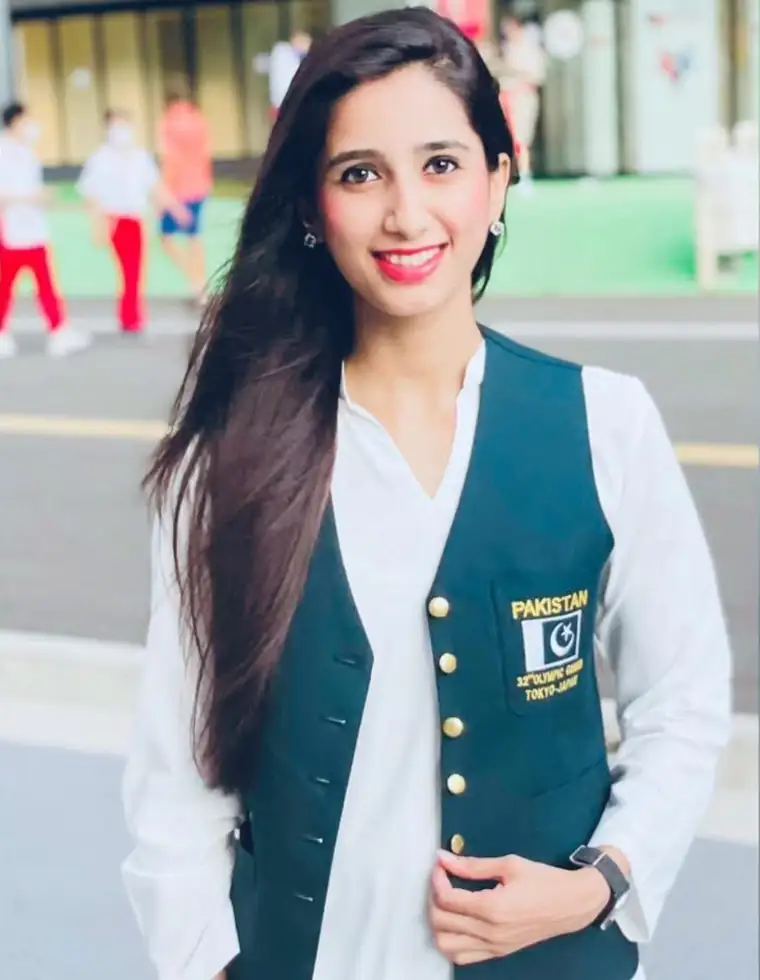
Mahoor Shahzad in the Pakistan team blazer at the Tokyo Olympic Games

At thirteen, Mahoor Shahzad won Pakistan’s national under-19 badminton title. She has spent most of the years since winning the senior one.

In February 2026 she took the National Badminton Championship again. It was her ninth in succession, and no Pakistani had held that title nine consecutive times before.

The sport she did not want to leave

Her father had played badminton at junior level, and he put his daughter through several sports before one of them held. Rowing came first, and she remembers it mainly as something to get through.

“I used to count down from each session of rowing to get to the weekend where I could actually enjoy,” she has said. “When I played badminton, however, I never wanted the training to end.”

She was thirteen when she became national under-19 champion. “After that, I never wanted to quit badminton. It became my passion.”

Born in Karachi in 1996, she picked up the racquet in 2008. She kept studying alongside it, taking a BS in Accounting and Finance at the Institute of Business Administration in Karachi, the kind of parallel career most Pakistani athletes need, because the sport alone rarely pays the bills. The Badminton World Federation later put her through a postgraduate certificate in international sports management at the University of London on a full scholarship.

Building a record abroad

The international results came steadily rather than all at once. Gold at the Pakistan International Series in 2017 and again in 2019, and gold at the Nepal International in 2018. Silver at the Pakistan International in 2016 and 2019, and at the Kenya International in 2020. Bronze with the women’s team at the 2019 South Asian Games, bronze at the Bulgarian International Championship the same year, and bronze again at the Uganda International in 2020.

She has represented Pakistan at three Asian Games, in 2014, 2018 and 2022, and at the Commonwealth Games in 2018 and 2022. A fourth Asian Games, in Japan, is ahead of her.

Her career-high world ranking in women’s singles is 117.

Tokyo

Pakistan’s badminton place at the Tokyo Olympics came through the tripartite invitation, the route the Games use to make sure smaller badminton nations are represented. Mahoor took it, and became the first Pakistani badminton player of either gender to compete at an Olympic Games.

She also carried the flag at the opening ceremony, alongside Muhammad Khalil Akhtar.

“It has always been my dream to represent my country at the highest level,” she said before travelling. “Qualifying for the Tokyo Olympics has definitely fulfilled my dream as it is the biggest sporting event around the globe.”

Nine in a row

The number that stands out on her record is not the Olympic appearance. It is the run of national titles.

Winning a national championship once takes form. Winning it nine years running takes something else: staying fit, staying motivated, and holding off every younger player who arrives each season specifically wanting to beat you. She was the target every time, and she kept winning.

She has stayed busy outside the nationals too. Three WAPDA Inter-Unit singles titles, in 2017, 2021 and 2025. Medals at three National Games: two golds and a silver at Peshawar in 2019, three golds at Quetta in 2023, two golds and a silver at Karachi in 2025.

What she tells girls who are starting

Mahoor has been consistent about this, and she puts it to parents as much as to players.

Each and every girl has a hidden talent which she can only find if she has freedom to discover her true potential.

“I would tell girls not to hesitate at trying something different, and I would request parents to allow their daughters to play outdoor sports.”

Coming from someone who was allowed exactly that, a father who handed her several sports until one of them stuck, it is not an abstract point. It is a description of how her own career became possible.

Why we wrote this

Pakistan tends to remember its cricketers and forget almost everyone else. Mahoor Shahzad has spent nearly a decade at the top of a sport that gets a fraction of the coverage, and she is still competing.

At SmashNRun we build sportswear in Pakistan, for people who train here. Writing about the athletes doing that work is part of the same idea. Records like hers deserve to be written down while they are still being set.

Made in Pakistan

What we make

SmashNRun builds sportswear and sports gear in Pakistan, for people who actually train here. Premium make, priced so you can wear it hard.
See the full rangeNew drops and athlete stories go out first on Instagram.
Posted on — Leave a comment

Nida Dar: Sixteen Years In, and Still Putting Her Hand Up

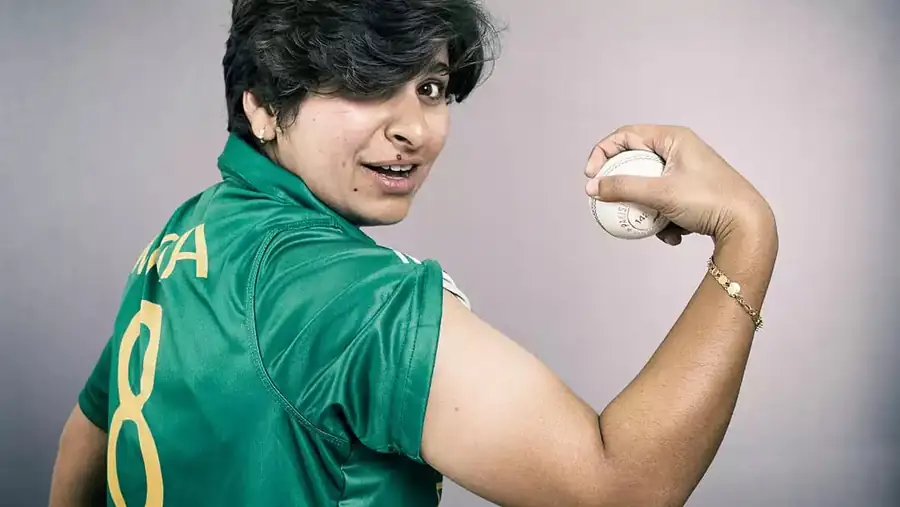
Nida Dar in Pakistan kit, holding a cricket ball

Nida Dar made her debut for Pakistan in May 2010. Most of the players she came up against have retired. She has not.

Last year, after a season away from international cricket, she made herself available for selection again.

Into a game with nothing around it

Born in Saudi Arabia in January 1987, she came into a Pakistan women’s setup that had very little around it, no professional pathway to speak of and almost no public attention.

She debuted in T20 internationals against Sri Lanka in May 2010, and in one-day internationals against Ireland five months later. A right-hand bat and a right-arm off-spinner, she has spent her career as an all-rounder in sides that usually needed her to be both at once.

A hundred wickets, and a first for Pakistan

In June 2021, against the West Indies, she became the first Pakistani cricketer to take 100 wickets in T20 internationals. Not the first Pakistani woman. The first Pakistani.

She has more than a hundred T20I appearances and over eighty one-day internationals behind her, along with a long domestic record. She is among the most successful bowlers the women’s T20 game has produced anywhere.

The captaincy

She was appointed captain in April 2023 and led the side for around sixteen months across all three formats.

Two results stand out from that spell. In December 2023 Pakistan beat New Zealand in a T20I series, the team’s first series win outside Asia and Ireland. Under the same captaincy Pakistan also whitewashed South Africa in a T20I series. For a side that had spent years being written off before it landed, both were genuine markers.

She stepped down in August 2024, handing over to Fatima Sana.

Lady Lala

The nickname followed her batting. It borrows from Shahid Afridi, and it stuck because the comparison was not much of a stretch: she hits hard, and she has never much cared for playing herself in.

It has become the shorthand for her, and she uses it herself. But it undersells the bowling, which is the part of her game the record books actually remember.

Still available

She is thirty-nine. She has captained her country, held a national record, and won a series abroad that nobody expected.

She could have finished there. Instead she took a year out, and then told the selectors she was available again.

Why we wrote this

Women’s cricket in Pakistan gets a fraction of the coverage the men’s game does, and the players who built it are rarely written about while they are still playing. Nida Dar has been there for sixteen years and is still putting her hand up for selection.

At SmashNRun we build sportswear in Pakistan, for people who train here. Writing about the athletes doing that work is part of the same idea.

Made in Pakistan

What we make

SmashNRun builds sportswear and sports gear in Pakistan, for people who actually train here. Premium make, priced so you can wear it hard.
See the full rangeNew drops and athlete stories go out first on Instagram.
Posted on — Leave a comment

Ahsan Ramzan: Sixteen Years Old, and a World Champion

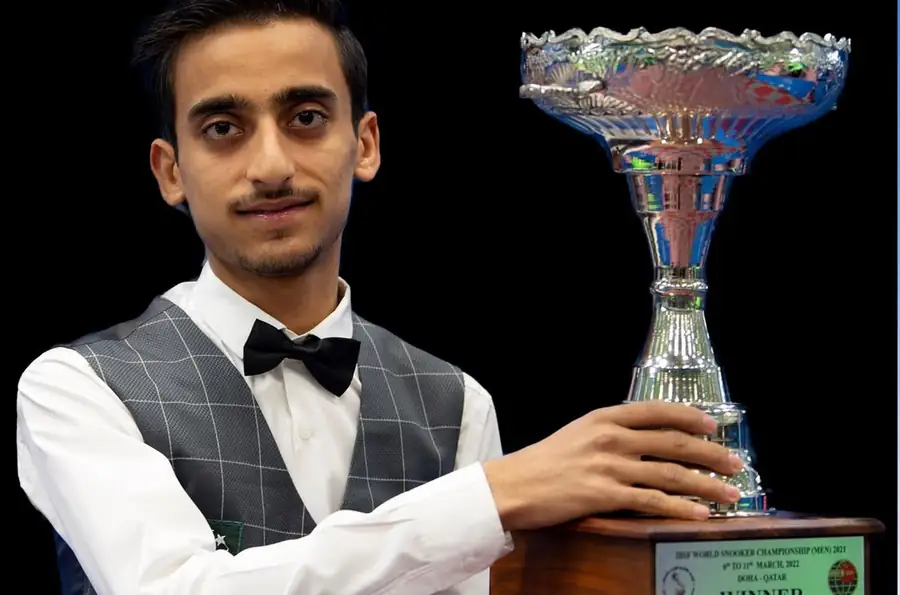
Ahsan Ramzan with the IBSF World Snooker Championship trophy

In March 2022, a sixteen-year-old from Lahore beat Iran’s Amir Sarkhosh 6–5 in the final of the IBSF World Snooker Championship. He had already knocked out Muhammad Asif on the way, a two-time world champion and a fellow Pakistani.

Asked about that match afterwards, Ahsan Ramzan did not talk about the upset. “It was an honour to face him,” he said, “as he was a Pakistani player.”

The cue his father hit him with

Ahsan lost his mother when he was very young. His father raised him, and for a long time his father wanted nothing to do with snooker.

Sent out to buy milk one day, the boy went to a billiard club instead. When his father found him there, he beat him with a cue.

The same man later became the reason he kept playing. When his father was dying, four years before the world title, he did not let his son sit at the bedside. He sent him to a national championship instead.

“That was not less than doomsday for me,” Ahsan said of losing him.

An hour there, an hour back

After his father’s death, his brothers put three options in front of him. Join the family poultry business. Go back to his studies. Or keep playing snooker and lose their financial support.

He chose snooker. He moved to Lahore, and walked an hour to the table and an hour home again.

“Any player who doesn’t have hunger, I believe he can do nothing,” he said. “I have immense hunger.”

What he did with the trophy

He was born on 14 August 2005, Pakistan’s Independence Day. He won a world championship at sixteen, one of the youngest players ever to do it.

When he was asked what the win meant, he did not describe it as a beginning or a breakthrough.

“If my parents were alive today, I would have given them the trophy,” he said. “Now, I will put this trophy on their graves.”

Since then

He is a two-time Asian Under-21 champion. The first came in 2023, beating Iran’s Milad Pourali Darehchi 5–2, in a year that also brought a runner-up finish at the IBSF 6-Reds World Championship. He had represented Pakistan at the 2022 World Games in Birmingham the season before.

In 2024 he lost the Asian Under-21 final to another Pakistani, Muhammad Hasnain Akhtar, 3–4. In 2026 he took the title back.

He is twenty now. Snooker in Pakistan runs on club tables, small purses and players who fund themselves. He has spent four years at the top of it.

Why we wrote this

Pakistan has produced world champions in snooker for decades and most people here could not name one. Ahsan Ramzan won a world title at sixteen after being told to choose between the sport and his family’s support, and he is still playing.

At SmashNRun we build sportswear in Pakistan, for people who train here. Writing about the athletes doing that work is part of the same idea.

Made in Pakistan

What we make

SmashNRun builds sportswear and sports gear in Pakistan, for people who actually train here. Premium make, priced so you can wear it hard.
See the full rangeNew drops and athlete stories go out first on Instagram.
Posted on

Abdul Khaliq: The Flying Bird of Asia Who Taught Pakistan to Run

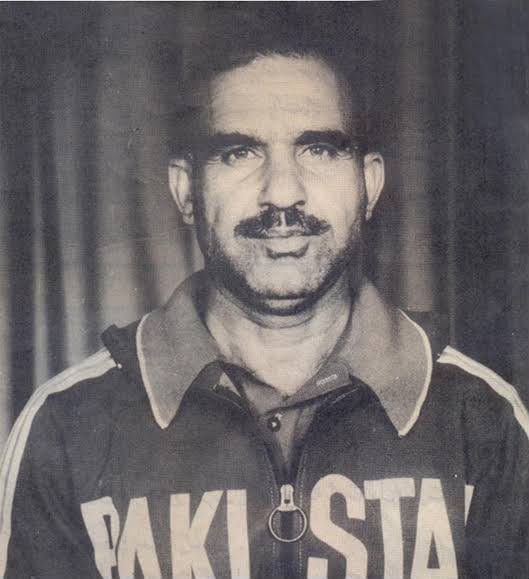
Abdul Khaliq wearing a Pakistan national tracksuit

Some athletes win races. Some redefine what their nation believes is possible. Abdul Khaliq did both.

Long before Pakistan had modern stadiums, professional training facilities or international sports funding, one man captured the imagination of an entire continent with nothing but extraordinary speed and relentless determination. His name was Abdul Khaliq, a sprinter whose performances earned him the unforgettable title of The Flying Bird of Asia.

Today his name is rarely mentioned outside sports history circles. Yet there was a time when he was considered one of the fastest men in Asia and one of Pakistan’s greatest sporting heroes. This is the story of the man who made Pakistan proud, one stride at a time.

The beginning of a legend

Abdul Khaliq was born on 28 March 1933 in Gujrat, Punjab. Growing up in a newly emerging nation, opportunities for athletes were limited, but talent has a way of finding its own path.

His exceptional speed soon became impossible to ignore. Representing the Pakistan Army, he developed into one of the country’s finest sprinters, combining natural ability with discipline and determination. At a time when Pakistan was still establishing itself on the international stage, he became one of the nation’s earliest sporting icons.

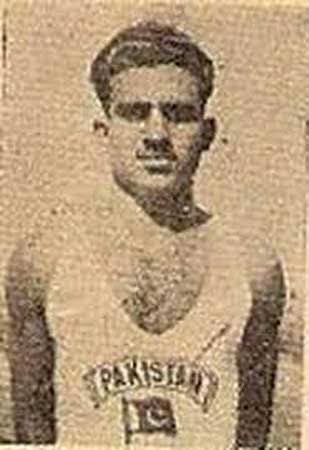
A young Abdul Khaliq in a Pakistan athletics vest
The young sprinter in a Pakistan vest, from the era that earned him the name The Flying Bird of Asia.

Becoming the fastest man in Asia

The 1950s were the golden years of his career. He dominated sprint events across Asia, winning medals and setting records that established Pakistan as a force in athletics. His greatest strength was the 100 metre sprint, where explosive starts and remarkable acceleration left spectators amazed.

His performances were so exceptional that Asian sports journalists and fans gave him a nickname that would stay with him forever.

The Flying Bird of Asia. It was more than a title. It was recognition that no athlete in Asia seemed capable of matching his speed.

The historic duel with Milkha Singh

Every great sporting era has its defining rivalry. For Abdul Khaliq it was his battle with India’s legendary sprinter Milkha Singh. Their races attracted enormous attention across South Asia, and whenever the two lined up at the starting blocks the contest became about far more than athletics. It symbolised pride, respect and sporting excellence between two neighbouring nations.

Initially Abdul Khaliq had the upper hand and defeated Milkha Singh in competition, reinforcing his reputation as Asia’s fastest sprinter. Then at the 1958 Asian Games in Tokyo, Milkha Singh produced one of the greatest performances of his career and beat him in the 200 metre final. After that victory Milkha Singh reportedly remarked that defeating Abdul Khaliq made him feel he had earned the title of The Flying Sikh.

The rivalry remains one of the greatest chapters in Asian athletics, defined not by hostility but by mutual respect and extraordinary competition.

Representing Pakistan on the world stage

Abdul Khaliq proudly represented Pakistan at multiple international competitions, including the Olympic Games, the Asian Games and numerous regional championships. During an era when international success was difficult for developing nations, he consistently proved that Pakistani athletes could compete against the very best.

Every race carried the hopes of an entire nation. Every finish inspired a new generation to dream bigger.

More than medals

Medals define statistics, but they rarely capture true greatness. Abdul Khaliq’s greatest contribution was changing how Pakistan viewed athletics. He inspired countless young athletes to believe that international success was achievable, and he demonstrated that discipline, resilience and dedication could overcome limited resources. For many Pakistanis he became proof that excellence was not reserved for wealthier nations.

Why his legacy matters today

Modern sports fans often celebrate today’s champions while forgetting the pioneers who built the foundation. Without athletes like Abdul Khaliq, Pakistan’s sporting history would be incomplete. He competed when facilities were scarce, sports science barely existed and athletes relied almost entirely on determination and hard work.

His achievements remind us that greatness is measured not only by records, but also by the barriers broken for those who follow.

A legacy that deserves to fly again

Abdul Khaliq passed away in 1988, but his legacy continues to inspire those who value courage, perseverance and national pride. The Flying Bird of Asia may no longer race on the track, yet his story still runs through the history of Pakistani sport.

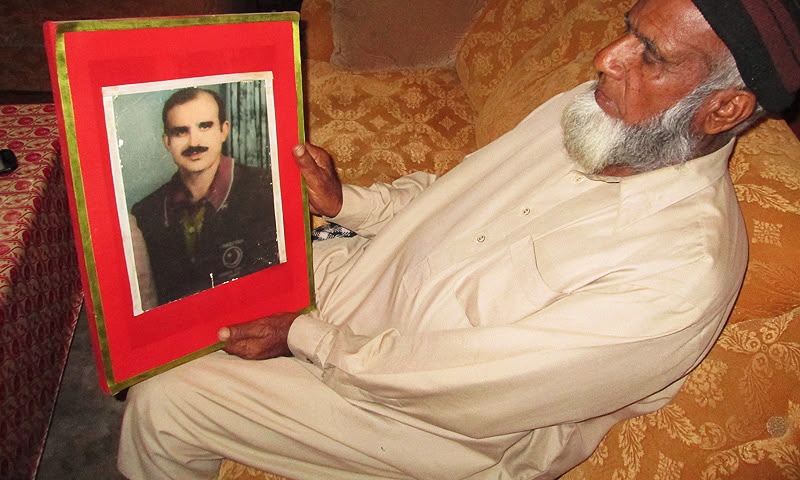
An elderly man holding a framed portrait of Abdul Khaliq
A framed portrait kept at home. For decades this was one of the few places his memory was held close.

Perhaps it is time more people knew his name. Perhaps it is time Pakistan remembered one of its greatest athletes. Because legends never truly disappear. They simply wait for a new generation to discover them.

At SmashNRun we believe every champion deserves to be remembered. Through our Forgotten Sports Legends of Pakistan series we celebrate the pioneers who shaped our sporting heritage and inspired generations to dream beyond the finish line.

Made in Pakistan

What we make

SmashNRun builds sportswear and sports gear in Pakistan, for people who actually train here. Premium make, priced so you can wear it hard.
See the full rangeNew drops and athlete stories go out first on Instagram.
Posted on

Padel or Tennis: Which Racquet Sport Should You Start With?

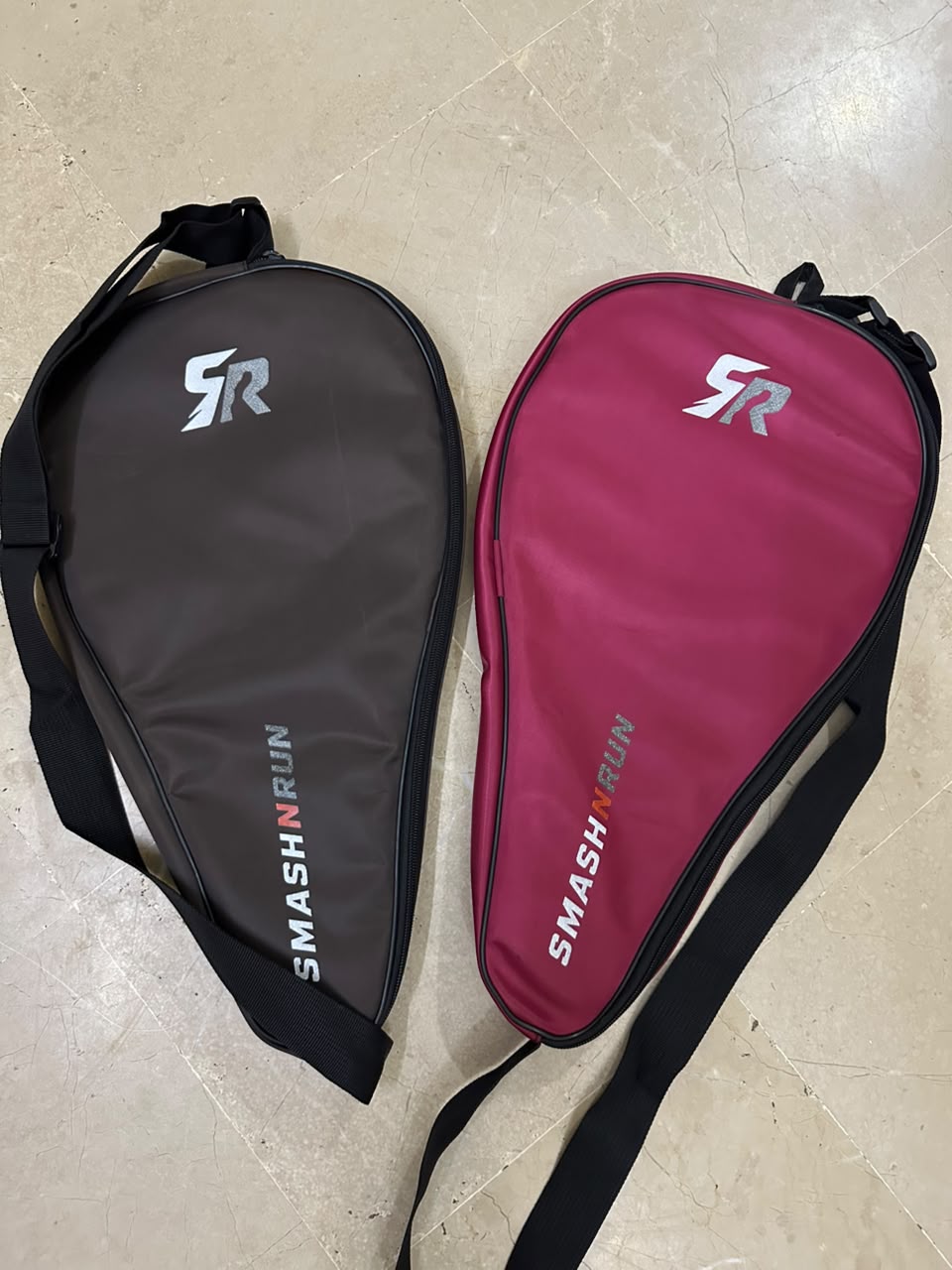
SmashNRun padel kit bags in black and maroon

Padel and tennis are related, and from a distance they look almost interchangeable. Play both for an hour and the family resemblance disappears. They reward different instincts, they take different amounts of time to enjoy, and one of them is far easier to start.

Here is an honest comparison for anyone deciding where to begin.

The court

A padel court is roughly a third of the size of a tennis court and it is enclosed by glass and mesh. Those walls change everything. A ball that would be a clean winner in tennis simply rebounds and stays in play, so rallies run longer and points are won by construction rather than by raw reach.

The equipment

Padel uses a solid, perforated paddle with no strings and a short handle. Tennis uses a strung racket with a much longer frame. The paddle has a smaller sweet spot but transmits far less shock through the arm, which is one reason players with elbow trouble often move across.

The serve

This is the biggest practical difference for a newcomer. A padel serve is underarm and must bounce before you hit it, so almost anyone can put the ball in play on day one. A tennis serve is an overhead motion that takes weeks of practice before it stops being a liability. If you want to play real points on your first afternoon, padel wins comfortably.

How quickly you improve

Most people can hold an enjoyable rally in padel within a single session. Tennis rewards you eventually and its technical ceiling is higher, but the first few months ask for patience. Neither is better. They simply place the difficulty at different ends of the journey.

The social side

Padel is played in doubles almost without exception, which means four people, constant conversation and an easy way to mix abilities in the same match. Tennis works as both singles and doubles, so it can be a sociable evening or a private duel depending on what you are looking for.

Physical demands

Tennis covers more ground and asks more of your shoulder and your endurance. Padel is played in short bursts with quick changes of direction and a lot of low, reactive movement. Both will leave you tired. Only one of them will make your calves ache from chasing balls off the glass.

So which should you try?

If you want to be playing real points quickly, in a group, with a low barrier to entry, start with padel. If you are drawn to technique, want a sport you can play alone against one opponent and enjoy a long learning curve, start with tennis. Plenty of people end up doing both, and the skills carry across more than you would expect.

Whichever you choose, our guide to choosing your first racquet sport kit will help you turn up prepared, and the 90 Series is designed for both courts. New to padel? Start with five things to know before your first match.

Made in Pakistan

What we make

SmashNRun builds sportswear and sports gear in Pakistan, for people who actually train here. Premium make, priced so you can wear it hard.
See the full rangeNew drops and athlete stories go out first on Instagram.
Posted on

Made in Pakistan: Why We Build Our Sportswear at Home

Athlete wearing a white SmashNRun crew tee

Every SmashNRun garment is made in Pakistan. That line sits quietly on a label, but it represents a set of decisions we thought about carefully long before we cut a single sample.

We wanted to stand next to the machine

Producing locally means someone from our team can be in the unit while the fabric is being knitted, while the first sample is stitched and while the run is being finished. Problems get solved in an afternoon rather than in a chain of emails across three time zones. When a seam sits wrong or a fabric feels heavier than the swatch promised, we see it in person and fix it before it becomes a thousand pieces.

The skill is already here

Pakistan has been one of the world’s serious textile countries for decades. Some of the most recognisable sports brands on earth quietly produce here. What has been missing is not capability, it is local brands willing to hold that capability to an international standard and put their own name on the result. Working with these units lets us draw on generations of craft instead of importing it.

The talent was never the problem. The ambition to build a premium Pakistani brand around it was.

Tested in the conditions it will be worn in

Kit designed for a mild European summer behaves very differently in Lahore in June. Because we develop and wear the product here, fabric weight, drying speed and the way a shirt handles genuine humidity are judged on the courts our customers actually play on. That is not a marketing line. It changes which fabrics survive our sampling stage.

Shorter distance, less waste

Producing close to home means smaller, more frequent runs rather than enormous shipments sitting in a warehouse for a season. We make what people are genuinely buying, we can adjust quickly when something sells faster than expected, and far less stock ends up unsold. It is better for the business and considerably less wasteful.

Value that reaches the customer

Importing finished garments adds freight, duties and several layers of margin, all of which land on the price tag. Building here removes most of that. It is the reason a SmashNRun kit can use good fabric and proper construction while staying within reach of a club player rather than only a sponsored one.

Building something worth being proud of

Padel, tennis and running are all growing quickly across Pakistan, and the people playing deserve gear that never feels like a compromise. Our goal is straightforward. We want a player in Karachi or Sargodha to pull on a kit made a few hundred kilometres away and feel that it stands beside anything shipped in from abroad.

You can read more about how the brand started on our About page, or see the current range in the shop.

Made in Pakistan

What we make

SmashNRun builds sportswear and sports gear in Pakistan, for people who actually train here. Premium make, priced so you can wear it hard.
See the full rangeNew drops and athlete stories go out first on Instagram.